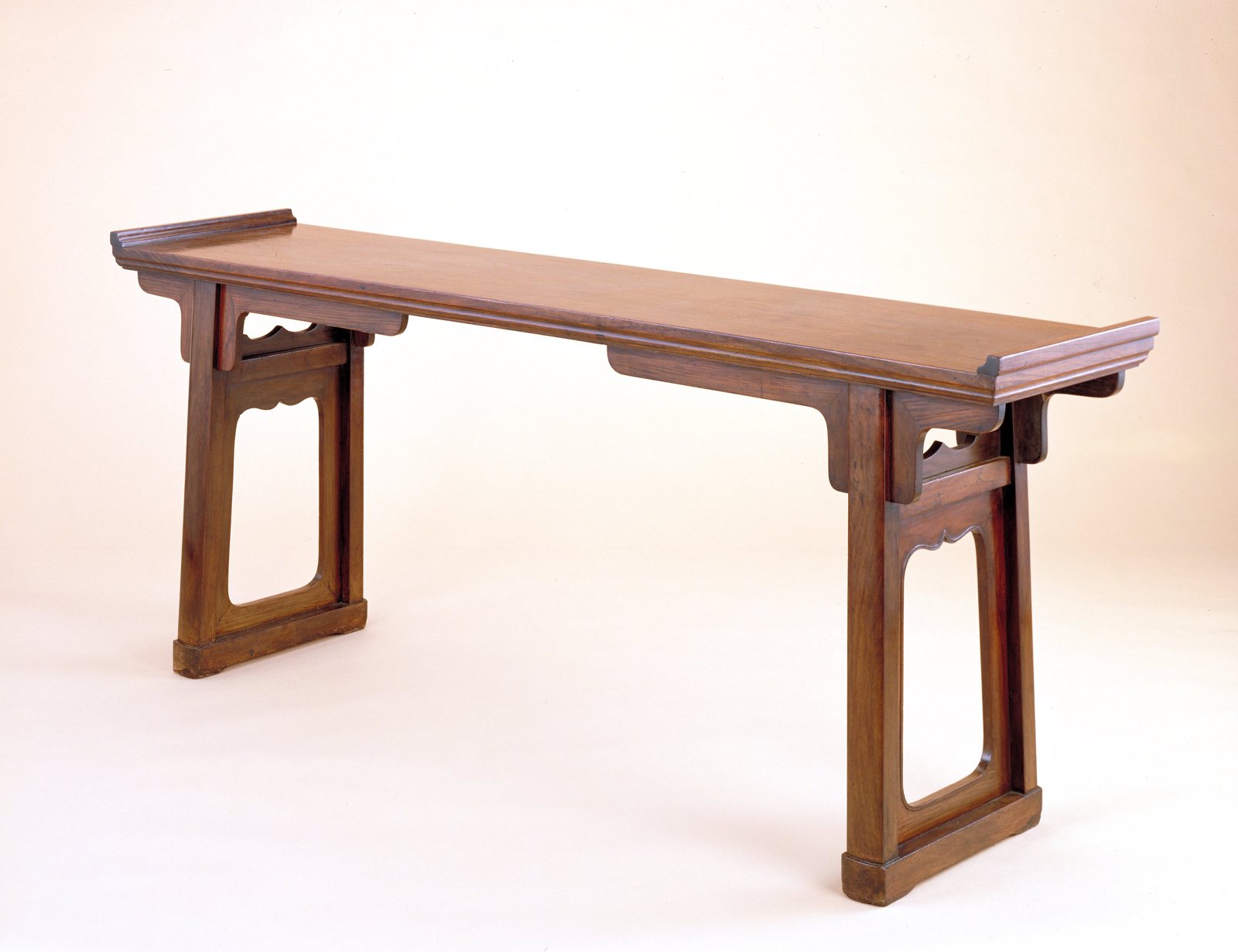
榫卯Chinese Joinery
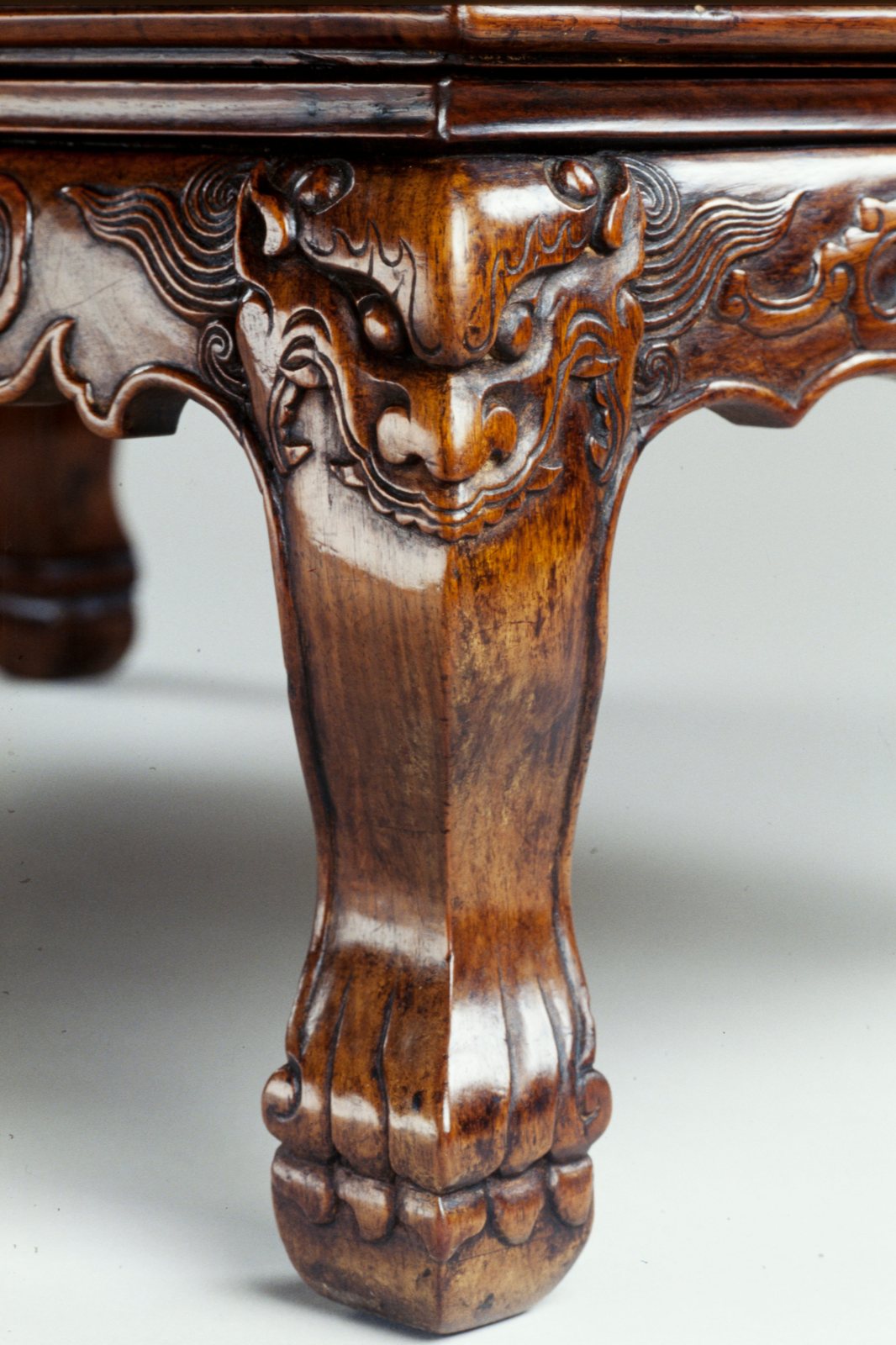
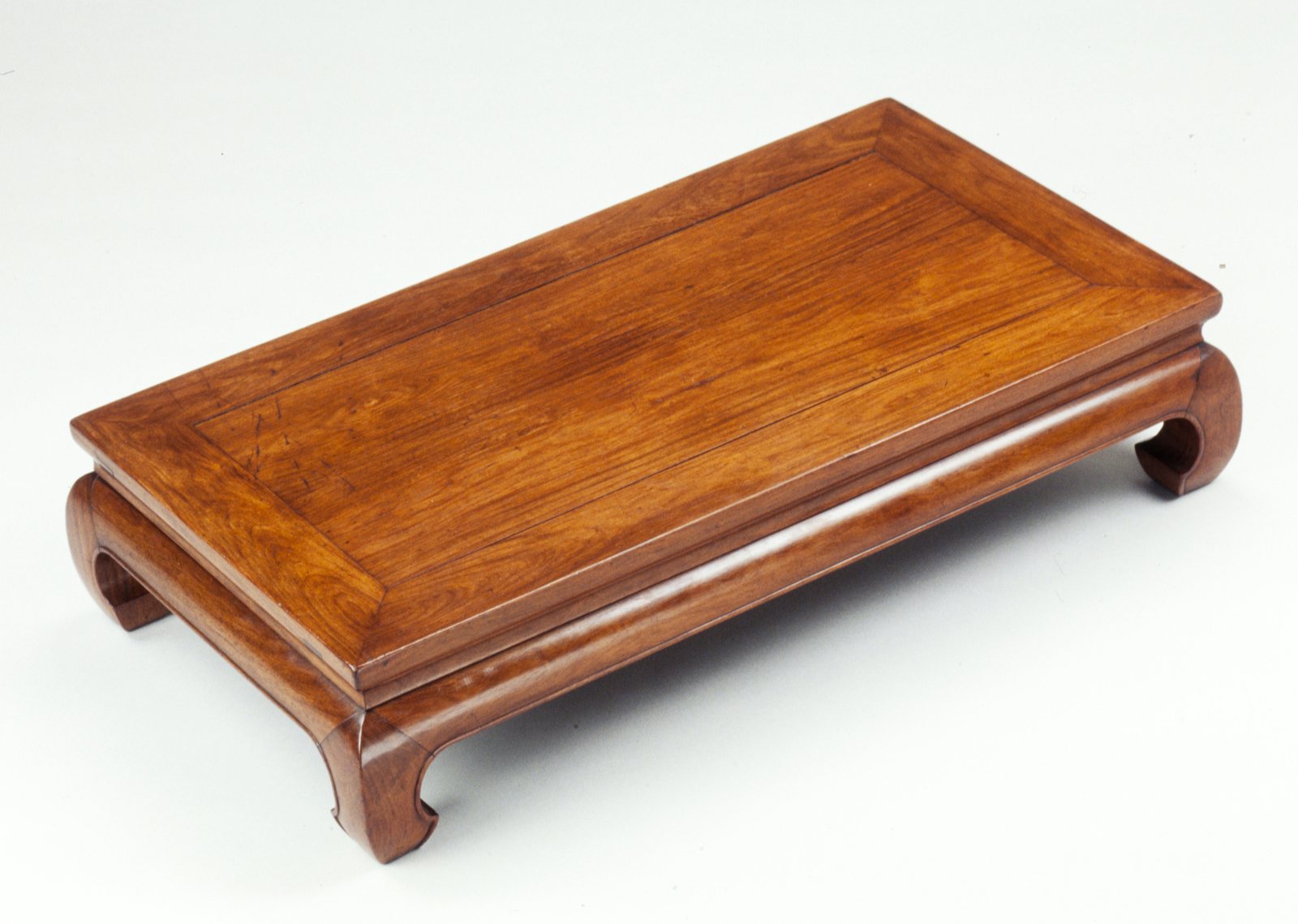
Kang table, Cleveland Museum of Art 1964.228 (CC0)
The art of Chinese joinery

Furniture held together
by geometry.

The corners of a Ming table hide a vocabulary of interlocking joints. We take them apart, one by one, so you can see exactly how they work.

Kang table, 1600s–1700s · Cleveland Museum of Art

Featured joints

Start with the classic corners.

Baojian Joint (抱肩榫)
抱肩榫

Baojian Joint (抱肩榫)

The hidden lock behind every waisted Ming table corner: a mitred shoulder, a triangular tenon and a tapered pin.

Explore the joint →
Zongjiao Joint (粽角榫)
粽角榫

Zongjiao Joint (粽角榫)

Three members, three 45° mitres, one perfect point: the corner joint of flush-sided tables and cabinets.

Explore the joint →
Long-and-Short Tenons (长短榫)
长短榫

Long-and-Short Tenons (长短榫)

Two tenons at right angles on the top of a leg: a long one for the long side, a short one for the end.

Explore the joint →
Mitred Frame Joint (格角榫)
格角榫

Mitred Frame Joint (格角榫)

The 45° corner of every Chinese frame-and-panel top: a tenon through the end plus a little triangular tongue.

Explore the joint →
Elongated Bridle Joint (夹头榫)
夹头榫

Elongated Bridle Joint (夹头榫)

The leg top is slotted to clamp the apron and its spandrel heads, then tenons into the top.

Explore the joint →
Inserted-Shoulder Joint (插肩榫)
插肩榫

Inserted-Shoulder Joint (插肩榫)

The leg is cut to a pointed shoulder that the grooved apron straddles, finishing flush; the heavier the top, the tighter it grips.

Explore the joint →
Giant’s-Arm Brace (霸王枨)
霸王枨

Giant’s-Arm Brace (霸王枨)

An S-curved brace from the leg up to the underside of the top, hooked into the leg and locked with a wedge.

Explore the joint →
Wedged Scarf Joint (楔钉榫)
楔钉榫

Wedged Scarf Joint (楔钉榫)

Curved pieces lapped with hooked tips and locked by a tapered key through the middle: how a horseshoe chair arm is built.

Explore the joint →
Sliding Locking Key (走马销)
走马销

Sliding Locking Key (走马销)

A dovetailed key planted in one part drops into the wide end of a slot and slides to the narrow end to lock.

Explore the joint →
Dovetail Joint (燕尾榫)
燕尾榫

Dovetail Joint (燕尾榫)

A tenon wider at the tip than at the root, so it can’t pull out: found in boxes, drawers, tables and temple beams.

Explore the joint →
Sliding Dovetail Batten (穿带)
穿带

Sliding Dovetail Batten (穿带)

A tapered dovetail batten driven across the back of a panel, its ends tenoned into the frame: the reason old tabletops stay flat.

Explore the joint →
Longfeng Board Joint (龙凤榫)
龙凤榫

Longfeng Board Joint (龙凤榫)

A half-dovetail tongue on one board slides into a matching groove in the next, so the seam can neither step nor pull apart.

Explore the joint →
Butterfly Key (银锭榫)
银锭榫

Butterfly Key (银锭榫)

A bow-tie key, two dovetails back to back, let in across a seam to lock thick boards together.

Explore the joint →
Mitred-Shoulder Joint (格肩榫)
格肩榫

Mitred-Shoulder Joint (格肩榫)

Where a rail meets a post, its outer face is cut to a point that fits a matching notch, so mouldings meet cleanly.

Explore the joint →
Wrap-Around Stretcher (裹腿枨)
裹腿枨

Wrap-Around Stretcher (裹腿枨)

Stretchers stand proud of a round leg and meet in a mitre at the corner, imitating bent bamboo.

Explore the joint →
Corner-Bracket Joint (托角榫)
托角榫

Corner-Bracket Joint (托角榫)

The small carved bracket under a table corner: tongued into a groove in the leg and pegged into the apron.

Explore the joint →
Big-In, Small-Out Tenon (大进小出榫)
大进小出榫

Big-In, Small-Out Tenon (大进小出榫)

Part blind, part through: a big tenon enters, a small one shows. It lets two stretchers share a leg without weakening it.

Explore the joint →
Breadboard End (拍抹头)
拍抹头

Breadboard End (拍抹头)

A cross-grain strip mitred and tenoned onto the end of a thick board: no end grain shows, and the board resists splitting.

Explore the joint →
Frame and Floating Panel (攒边打槽装板)
攒边打槽装板

Frame and Floating Panel (攒边打槽装板)

A mitred frame grooved on the inside, a thin panel with a tongued edge floating in the groove, and battens underneath.

Explore the joint →
Hidden Mitred Dovetail (闷榫)
闷榫

Hidden Mitred Dovetail (闷榫)

Dovetails hidden inside a mitred corner: once closed, only a single seam line shows.

Explore the joint →
Through Tenon (透榫)
透榫

Through Tenon (透榫)

The tenon runs right through and its end grain shows on the far side: strong, but less neat than a blind tenon.

Explore the joint →
Blind Tenon (半榫)
半榫

Blind Tenon (半榫)

The tenon stops inside the post, so nothing shows on the outside: neat, a little less strong than a through tenon.

Explore the joint →
Loose Tenon (栽销)
栽销

Loose Tenon (栽销)

The tenon is a separate piece of wood planted into mortises in both parts, easy to replace if it wears.

Explore the joint →
Column-Head Tenon (馒头榫)
馒头榫

Column-Head Tenon (馒头榫)

A short square tenon on the column head fits a socket under the beam, so the beam can’t slide off.

Explore the joint →
Column-Foot Tenon (管脚榫)
管脚榫

Column-Foot Tenon (管脚榫)

A short round tenon at the column foot drops into a socket in the stone base, so the column can’t shift.

Explore the joint →
Clasping-Head Tenon (箍头榫)
箍头榫

Clasping-Head Tenon (箍头榫)

The beam drops into a slot across the column head and runs on past it; the head beyond “clasps” the column.

Explore the joint →
Pipe-Bowl Joint (挖烟袋锅榫)
挖烟袋锅榫

Pipe-Bowl Joint (挖烟袋锅榫)

The rail end turns down and is hollowed from below like a pipe bowl to sit on the post’s tenon: a rounded corner with no projecting end.

Explore the joint →
Hook-and-Wedge Tenon (勾挂榫)
勾挂榫

Hook-and-Wedge Tenon (勾挂榫)

A right-trapezoid tenon enters low in a taller mortise, is pushed up so the sloping faces hook, and a wedge fills the gap below.

Explore the joint →
Flying Shoulder (飘肩)
飘肩

Flying Shoulder (飘肩)

Round stretcher flush with a round leg: tenon on the inner half, the outer half a shoulder that “floats” over the curve.

Explore the joint →
Staggered Stretchers (赶枨)
赶枨

Staggered Stretchers (赶枨)

Stretchers from the front and side meet a leg at different heights, so their mortises never weaken it at one spot.

Explore the joint →
Cross-Halving Joint (十字枨)
十字枨

Cross-Halving Joint (十字枨)

Two members cross, each cut away by half its depth, and drop together flush.

Explore the joint →
Dovetail with Sleeve Shoulder (袖肩燕尾榫)
袖肩燕尾榫

Dovetail with Sleeve Shoulder (袖肩燕尾榫)

A beam end with a dovetail and a short sleeve shoulder drops into a socket in the column head and can’t be pulled out.

Explore the joint →
Shiplap Joint (企口榫)
企口榫

Shiplap Joint (企口榫)

Each board edge keeps half its thickness as a lip; the lips overlap, so the seam never opens straight through.

Explore the joint →
Through-Base Tenon (套顶榫)
套顶榫

Through-Base Tenon (套顶榫)

A long square tenon at the column foot passes through a hole in the base stone into the foundation below.

Explore the joint →
Palm Splice (巴掌榫)
巴掌榫

Palm Splice (巴掌榫)

Old column and new foot are each cut to a half-thickness “palm”; the palms overlap, short tenons lock their ends, and iron hoops bind it.

Explore the joint →
Hidden Dowel (暗销)
暗销

Hidden Dowel (暗销)

Two lengths meet end to end and a square pin hidden inside the joint keeps them in line: nothing shows outside.

Explore the joint →
Twin Stub Tenons of a Short Post (瓜柱双半榫)
瓜柱双半榫

Twin Stub Tenons of a Short Post (瓜柱双半榫)

A short post stands on the back of a beam on two blind tenons, its shoulders shaped to the curve of the beam.

Explore the joint →
Wedged Through Tenon (破头楔)
破头楔

Wedged Through Tenon (破头楔)

A kerf is sawn into the end of a through tenon; once the tenon is in, a wedge is driven in and spreads it tight.

Explore the joint →
Tightening Wedge (挤楔)
挤楔

Tightening Wedge (挤楔)

The tenon is made slightly smaller than the mortise, and a thin tapered wedge is driven into the gap to squeeze the joint tight.

Explore the joint →
Loose-Tenon Board Joint (栽榫拼板)
栽榫拼板

Loose-Tenon Board Joint (栽榫拼板)

Thick boards are joined edge to edge with separate straight tenons planted into mortises in both edges.

Explore the joint →
Short Struts (矮老)
矮老

Short Struts (矮老)

Short vertical struts between a stretcher and the member above, tenoned at both ends.

Explore the joint →
Plain Glued Edge Joint (平口胶合)
平口胶合

Plain Glued Edge Joint (平口胶合)

Two thick boards with edges planed dead straight on a very long plane, glued face to face: no tenons, no battens.

Explore the joint →
Open Straight-Tenon Corner (明榫角接合)
明榫角接合

Open Straight-Tenon Corner (明榫角接合)

Straight tenons cut open on the board ends, interlocking at the corner and showing on both faces.

Explore the joint →
Half-Blind Dovetail (半隐燕尾榫)
半隐燕尾榫

Half-Blind Dovetail (半隐燕尾榫)

Dovetails on the side board fit sockets that stop short of the front face, so the joint shows on one face only.

Explore the joint →
Opposed Tapered Battens (抄手榫)
抄手榫

Opposed Tapered Battens (抄手榫)

Tapered dovetail battens are driven in from opposite sides, one big end on each side, pulling the board seams tight.

Explore the joint →
Purlin Dovetail (桁檩燕尾榫)
桁檩燕尾榫

Purlin Dovetail (桁檩燕尾榫)

Where two purlins meet over a beam head, one carries a dovetail half its diameter high that drops into a socket in the other.

Explore the joint →
Cross Insert Splice (十字插接榫)
插接榫

Cross Insert Splice (十字插接榫)

One column length ends in a cross-shaped tenon that plugs into a cross-shaped mortise in the other; iron hoops bind the joint.

Explore the joint →
Through Pin (透销)
透销

Through Pin (透销)

A planted pin made long enough to pass right through a heavy apron and into the frame above it.

Explore the joint →
Interlocking Cabinet Stretchers (两枨互让)
柜子底枨两枨互让

Interlocking Cabinet Stretchers (两枨互让)

Front and side bottom stretchers meet the leg at the same height: one keeps the lower half of its tenon through, the other the upper half.

Explore the joint →
Square Shoulder (齐肩膀)
齐肩膀

Square Shoulder (齐肩膀)

A T-joint with a shoulder cut straight across, no mitre: used where rail and leg are not flush.

Explore the joint →
Leg and Base Frame (腿足与托泥)
腿足与托泥

Leg and Base Frame (腿足与托泥)

The base frame is mitred at each corner; at the seam a socket wide at the bottom takes a matching tenon on the foot, and the frame is assembled around it.

Explore the joint →
Flush-Sided Corner (四面平榫)
四面平结构

Flush-Sided Corner (四面平榫)

No waist: the leg is mitred right under its long-and-short tenons, and a half-dovetail pin on each face hooks the apron, so leg, apron and top all lie flush.

Explore the joint →
Hidden Mitre With a Loose Block (方材闷榫角接合)
方材闷榫角接合

Hidden Mitre With a Loose Block (方材闷榫角接合)

Both members are cut to 45°, a socket is cut in each mitre face, and a rectangular block is glued into both: only a mitre line shows.

Explore the joint →
Mantis-Head Splice (螳螂头口)
螳螂头榫

Mantis-Head Splice (螳螂头口)

One member ends in a narrow neck and a wide “mantis head”, cut through its full depth; it drops from above into a matching socket in the next member, so the two cannot be pulled apart.

Explore the joint →
3D

Take a joint apart

Drag to rotate. Slide to pull the zongjiao joint apart, then press Assemble and watch three square members close on a single point. Every joint guide comes with a model like this.

Read the zongjiao guide

Explore by furniture

Start from the piece, then see how its corners are made.

Why it matters

A craft that speaks in shapes

Sunmao (榫卯) joins two pieces of wood by shaping one to fit into the other: the projecting part is the tenon (榫), the hollow is the mortise (卯).

In the Ming dynasty, makers working in dense hardwoods like huanghuali took the idea to extraordinary lengths. At a single corner a leg, an apron, a waist and a top frame meet, and all you see is one fine seam.

Every joint answers the same question: how do you make wood strong, beautiful, and able to move with the seasons without splitting? Once you can read the joints, you will never look at old furniture the same way again.

图

The atlas

A map of Chinese furniture joinery in three families: board joints, point joints and three-member assemblies.

Open the atlas